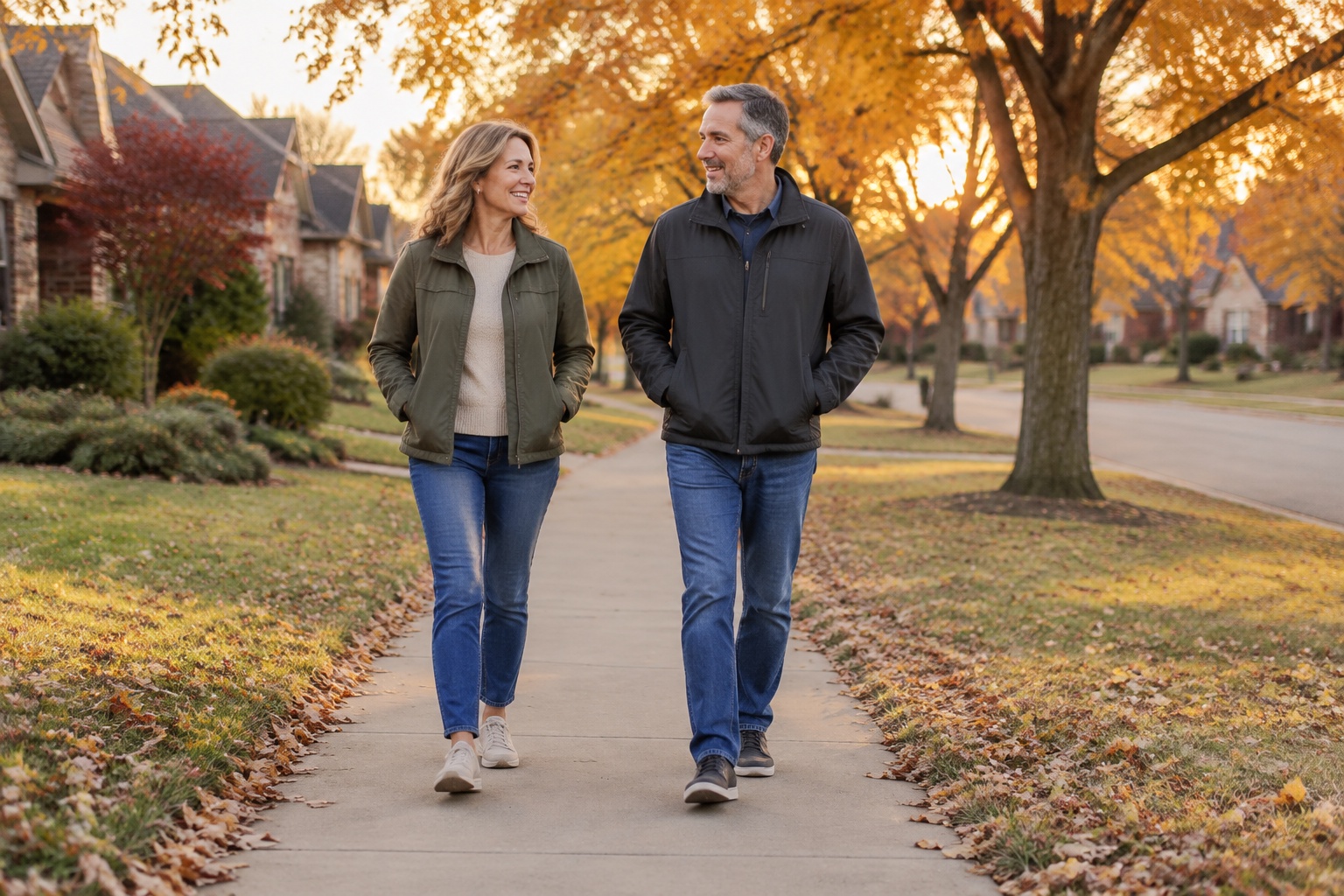
Thanksgiving does not need a side dish of food guilt. You do not have to earn your meal or punish yourself for pie.
But a short walk after dinner can be a useful habit. Think of it as giving your body a little help, not sending it to boot camp.
What does the research show?
In a 2016 randomized study, 41 adults with type 2 diabetes tried two walking plans. One plan called for 30 minutes of walking each day. The other called for 10 minutes after each main meal. Each plan lasted two weeks.
The rise in blood sugar after meals was lower during the after-meal walking plan. The biggest difference was after dinner. This was a small, short study in people with type 2 diabetes. It does not prove that one holiday stroll prevents diabetes, causes weight loss, or works the same for everyone.
Still, it gives us a practical idea to discuss: when we move may matter, along with how much we move.
Start with a plan you can repeat
The CDC suggests a 10-minute walk after dinner as one way to start being more active. Build up slowly. Ask your clinician which activities fit your health and abilities.
For a Northwest Arkansas holiday gathering, try this:
- Pick the moment. After the meal, invite someone to join you before settling in for the next show or game.
- Pick a safe route. Use a flat, well-lit sidewalk near home. Watch for wet leaves and uneven ground. If it is cold, dark, or rainy, choose a clear indoor route.
- Keep it doable. Start with a few comfortable minutes if 10 feels like too much. This is a starting habit, not a fitness test.
- Keep the company. A walk can be time to catch up with family. Skip the commentary about anyone's plate or body.
Write down a simple cue: “After dinner, I will put on my shoes and walk my usual route.” A plan with a time and place is easier to remember than “I should exercise more.”
A safety check belongs in the plan
Movement can lower blood sugar. If you use insulin or medicines called sulfonylureas, exercise can raise your risk of low blood sugar. Indian Health Service guidance recommends an individual plan for glucose checks, medicines, and food around activity. Carry your prescribed low-blood-sugar treatment. Do not change medicine doses on your own.
If you have foot sores, balance problems, heart disease, or limits on walking, ask your care team for an activity that fits. An indoor or seated option may be more suitable. Chest pain, fainting, or severe shortness of breath needs urgent medical help, not a longer walk.
One habit, not your whole health plan
A short walk does not replace meals that meet your needs, prescribed medicine, sleep, or follow-up care. For more context, read our guide to A1C and prediabetes. Taking a GLP-1? Our Thanksgiving meal guide can help you prepare questions for your prescribing team.
At Healing Art Centers in Lowell, we help people across Northwest Arkansas discuss hormone and metabolic health concerns. A few January 2027 new-patient hormone and functional medicine consultation spots have opened. View current availability and request a consultation. Our receptionist follows up by email. A request is not a confirmed booking. Keep working with your current clinician while you wait.
Your holiday goal can be simple: enjoy the people, enjoy the meal, and choose one habit you can carry into next week.
For education only. This article does not replace individual medical advice.
Plan metabolic care with your current clinician
A few January 2027 new-patient hormone and functional medicine consultation spots have opened. Request a consultation, and our receptionist will follow up by email about availability and next steps. A request is not a confirmed booking. Keep working with your current clinician on blood sugar, medicines, and exercise safety while you wait.