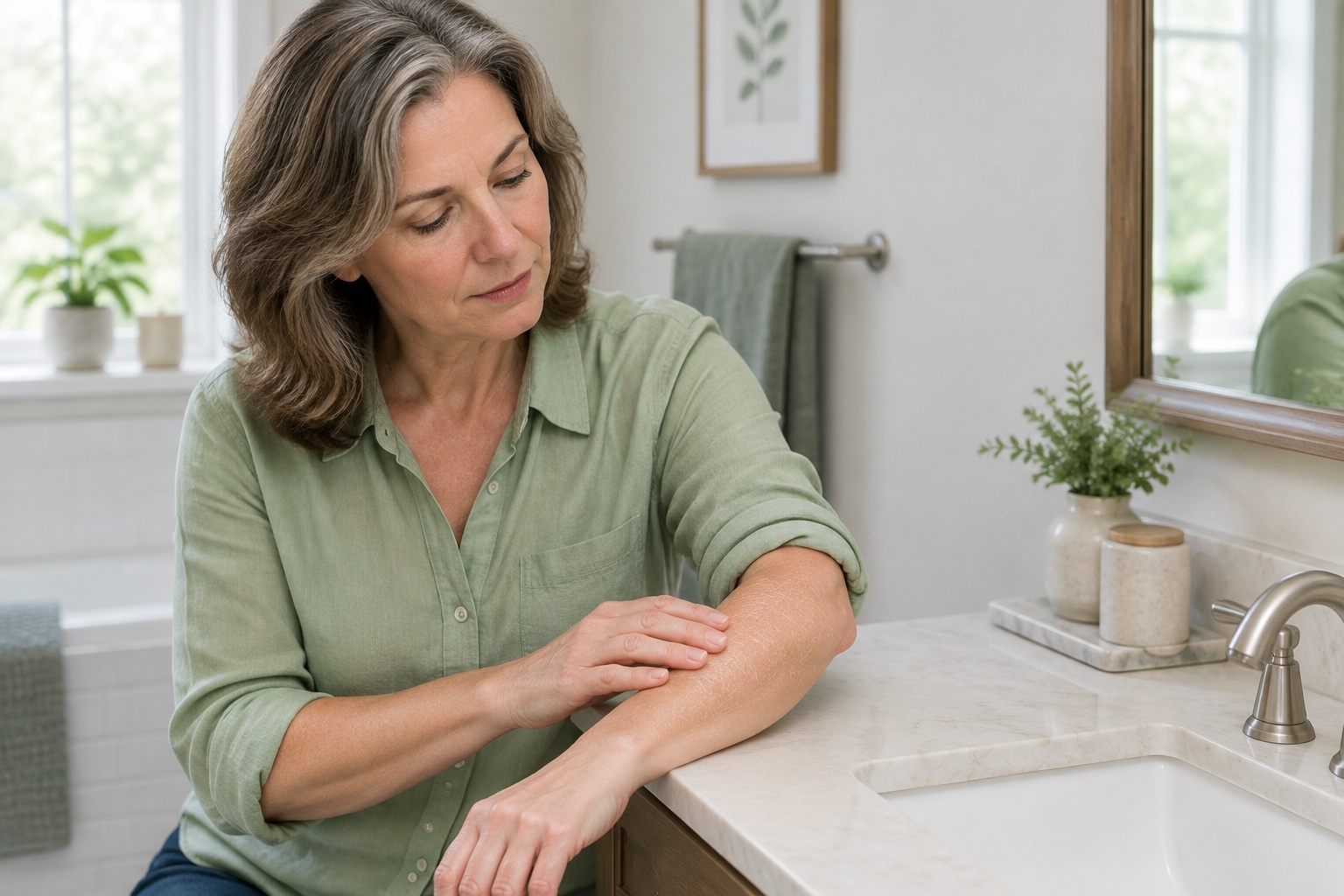
Your skin used to tolerate almost anything. Now your favorite lotion stings, your legs itch, and the shower feels like a temporary fix.
You do not need a bathroom full of new products. Start with a simpler question: what does your skin need, and what might be irritating it?
Why skin can feel different at menopause
The American Academy of Dermatology's menopause guide explains that skin becomes less able to hold water during menopause. Dry air can make the change more noticeable. Skin may also become more easily irritated.
Think of your skin barrier like a jacket. It helps keep moisture in and irritants out. When that jacket is not doing its job well, adding more harsh products is a little like scrubbing a worn sleeve harder.
Hormone changes can be part of the picture. That does not mean every itch is a hormone problem or that you should change a hormone dose on your own.
Try a smaller routine
These steps come from the AAD's dry-skin care guidance:
- Turn down the heat. Use warm water. Keep baths and showers to about five to ten minutes.
- Clean gently. Choose a mild, fragrance-free cleanser. Skip a big, foamy scrub.
- Moisturize while skin is damp. Pat dry gently, then apply a cream or ointment. These often work better for dry skin than a light lotion.
- Read the label. Choose “fragrance-free.” “Unscented” may still contain ingredients that hide a scent.
- Repeat as needed. Keep moisturizer near the sink so you remember it after washing your hands.
If a product stings or makes irritation worse, stop using it and ask your clinician what to try next. Before adding an anti-itch cream, get advice. Some products can irritate already dry skin.
Do not scrub your way out of dryness
Flakes can tempt you to reach for a scrub or peel. The AAD's menopause guidance advises checking with a dermatologist before exfoliation or microdermabrasion. Thinner, more delicate skin can be harmed by home treatments.
For now, write down the names of products you use. Include face wash, body wash, moisturizer, and any new skin treatments. Bring the list, or photos of the labels, to your visit. A product trail can be more helpful than another mystery jar.
When a skin exam is the next step
If gentle care does not help, arrange an exam. A rash that lasts or a known skin condition that worsens also deserves a closer look. You do not have to keep guessing at the store shelf.
Tell your clinician where it itches, when it started, what changed, and whether a rash appeared. Mention any new medicines or products. Do not label a lasting skin change “just menopause” without discussing it.
Plan your next step in Northwest Arkansas
At Healing Art Centers in Lowell, you can discuss menopause concerns and your care options. Our menopause and perimenopause page explains that area of care. If sleep has changed too, our sleep guide can help you prepare questions.
A few January 2027 new-patient hormone and functional medicine consultation spots have opened. View current availability and request a consultation. Our receptionist follows up by email. A request is not a confirmed booking. Keep working with your current clinician on persistent skin symptoms while you wait.
Your skin deserves care, not a battle plan with twelve new bottles.
For education only. This article does not diagnose a skin condition or replace individual medical advice.
Plan care without delaying a skin exam
A few January 2027 new-patient hormone and functional medicine consultation spots have opened. Request a consultation, and our receptionist will follow up by email about availability and next steps. A request is not a confirmed booking. Keep working with your current clinician on persistent skin symptoms while you wait.