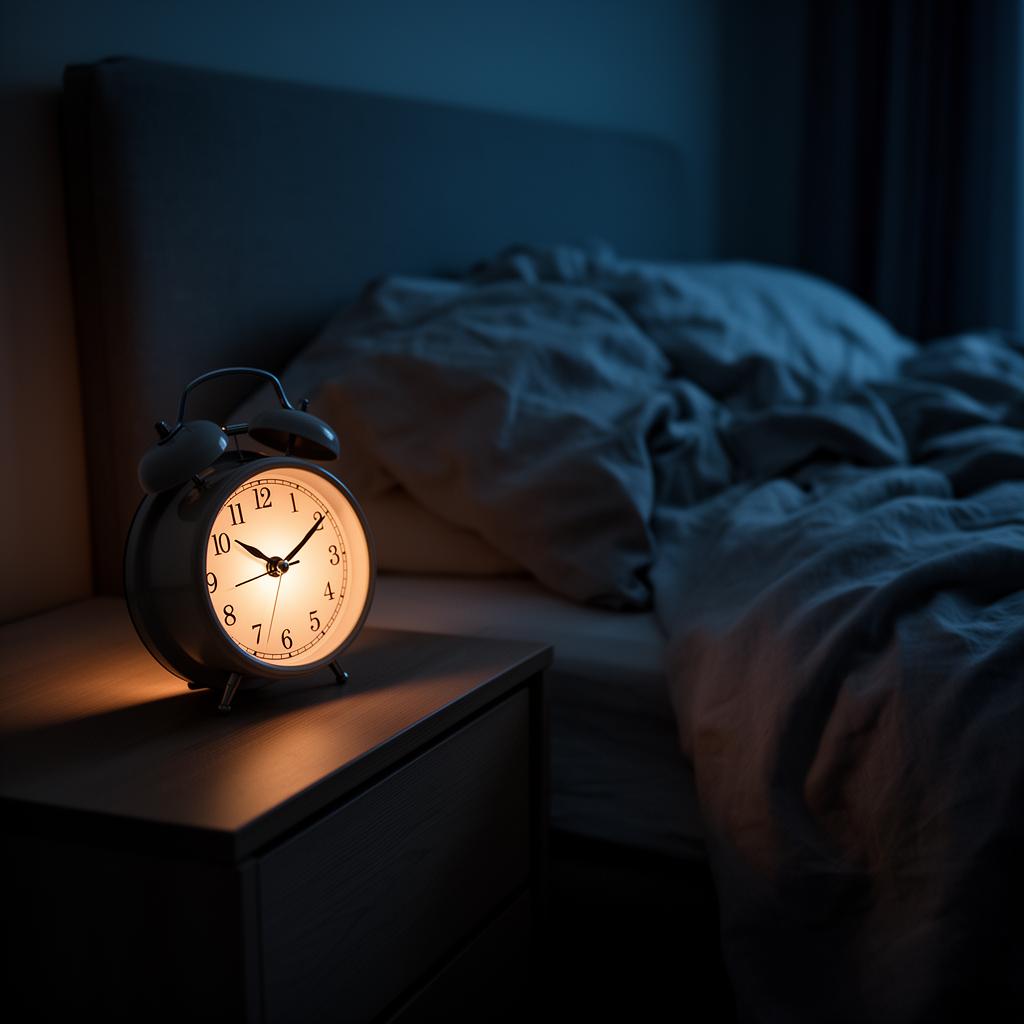
You finally sit down. The dishes can wait. A glass of wine feels like a quiet reward. Then you wake up in the middle of the night and wonder why your brain has opened for business.
If this sounds familiar, your evening routine is worth a look. Think of feeling sleepy and staying asleep as two different doors. Alcohol may help open the first while making the second harder to keep closed. [1]
Relaxed at bedtime can still mean restless later
Alcohol can make falling asleep easier. But it can also lead to lighter sleep and more waking during the night. NHLBI advises avoiding alcohol close to bedtime. NIAAA also notes that sleep after drinking can be broken up and end earlier. [1,2]
That does not tell us what caused your last bad night. It gives us one useful question to ask. The answer may be more helpful than buying another pillow at 2 a.m.
Start with a simple sleep note
For one to two weeks, keep a short diary. Write down bedtime, wake-up time, naps, and how sleepy you feel during the day. Include when you drink alcohol or caffeine and when you exercise. These are details NHLBI suggests bringing to a sleep visit. [3]
Add any symptoms you notice, such as sweating or discomfort. You are recording your experience, not proving a diagnosis. A note on your phone or a sheet beside the bed is enough.
- What did I drink, how much, and when?
- When did I get into bed and wake up?
- How did I feel the next morning?
- What else was different that day?
Bring the pattern to your clinician. A quiet night and a rough night both give useful information. You do not need to explain the whole problem before asking for help.
Keep the pause. Rethink the routine.
For people who can safely choose an alcohol-free evening, try keeping the pleasant parts of the ritual. Use your favorite glass for sparkling water with citrus. Sit down with a book. Give yourself permission to be off duty for a few minutes.
A cool, quiet, dark bedroom and a steady sleep schedule can also help. NHLBI recommends a calming routine, such as reading or listening to soothing music. [1]
Choose a small step you can repeat during a busy Northwest Arkansas week. Write down what you notice. This is a conversation starter, not a promise that one change will solve every sleep problem.
One change needs medical support
If you have been drinking heavily for a long time, suddenly stopping can cause dangerous withdrawal. Get medical help to plan a safe change. Tell your clinician about your drinking and any symptoms that appear when you cut back. You deserve care without shame. [4]
When sleep needs a wider look
If poor sleep affects your daily activities, talk with a clinician. Mention loud snoring, waking up gasping, medicines, and other health changes. Your visit may include checking for causes beyond your evening routine. [3]
Ask about cognitive behavioral therapy for insomnia, called CBT-I. It is a structured treatment that is usually recommended first for long-term insomnia. [1]
Your local next step
At Healing Art Centers in Lowell, we want you to have room to explain what has changed. We serve Rogers, Springdale, Fayetteville, Bentonville, and nearby communities. Explore our functional medicine approach or browse more patient education.
For ongoing, nonurgent concerns, visit our consultation page and join the new-patient wait list. General and hormone consultations currently use a wait list.
General education. Your health history and symptoms guide your individual care.
Sources
Wondering if this is what's going on with you?
New general and hormone consultations currently use a wait list. Visit our consultation page for current availability and how to join.