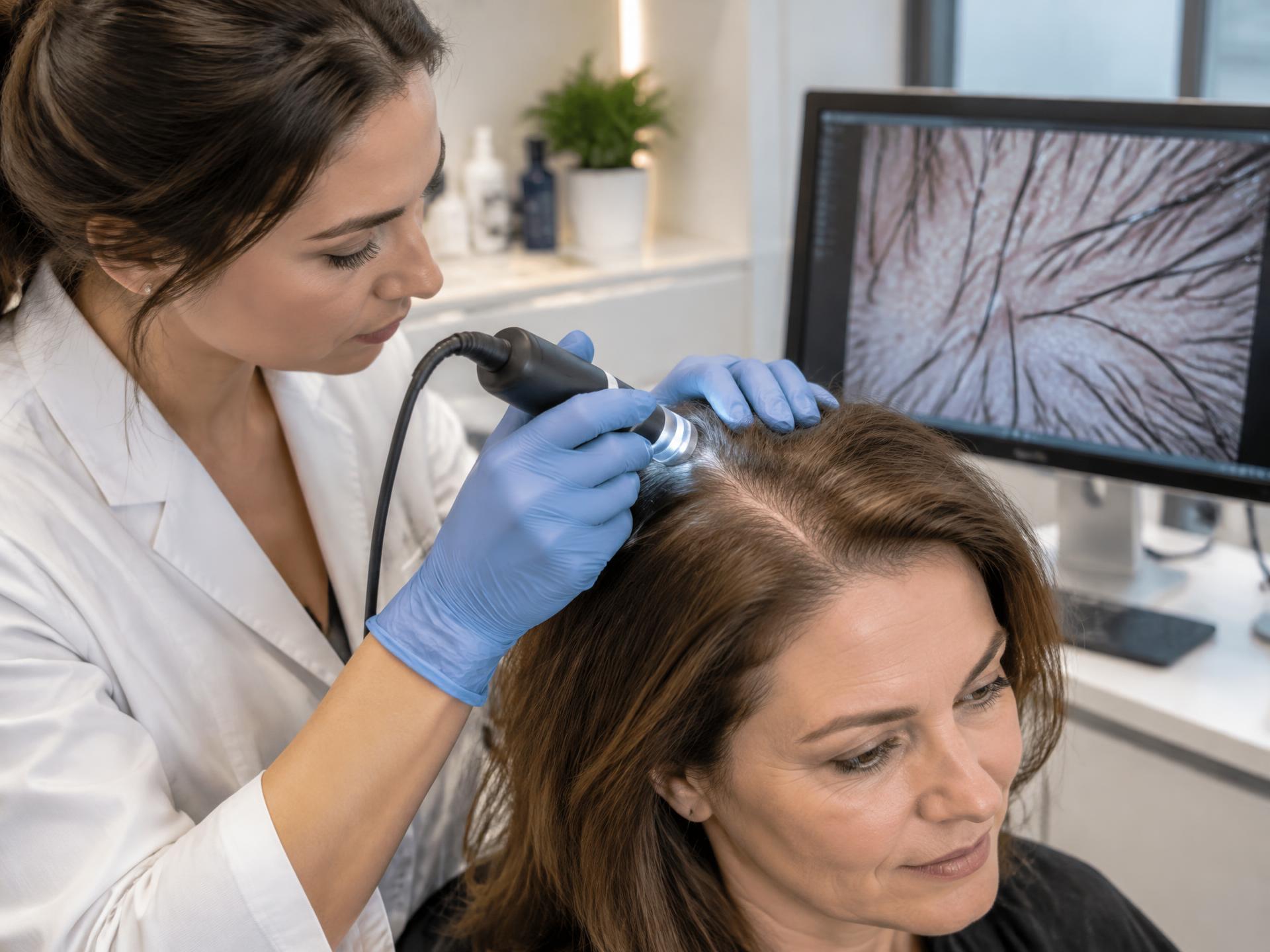
More hair in the brush can feel like one more midlife surprise. You deserve an answer that goes deeper than “try this shampoo.”
Hair changes can have more than one cause. Menopause may be part of the picture. It should not end the conversation.
Shedding and thinning tell different stories
Some people shed more hair a few months after illness, surgery, major stress, or weight loss. This is often called telogen effluvium. The delay can make the trigger easy to miss. A dermatologist can tell whether you have excess shedding, another type of hair loss, or both. [1]
Think of hair like a garden. More leaves falling and fewer plants growing can look similar from a distance. The right next step depends on what is happening at the roots.
A part that slowly gets wider can be a sign of female pattern hair loss. This inherited condition often begins in midlife. It is more common after menopause, so hormones may play a role. Other conditions can look similar. [2]
Look back before you look for a product
Make a short note for your visit. It does not need to be a perfect diary.
- Timing: When did you first notice the change? What happened in the months before it?
- Pattern: Is hair coming out all over, is your part wider, or are there bare patches?
- Body changes: Note recent illness, surgery, changes in weight or eating, and other symptoms.
- Products and medicines: Bring a list of prescriptions, hormone products, and supplements. Include start dates and recent changes.
A few photos in the same light can help you explain what you see. Daily strand counting does not have to become your new hobby. You already have enough laundry.
Ask which tests would change the plan
Hair loss can be linked to thyroid disease, anemia, medicines, and other conditions. A health history and scalp exam help narrow the cause. [3]
Blood tests or a scalp biopsy may be useful when the exam suggests a disease, nutrient shortage, hormone problem, or infection. Testing should fit the findings. [4] Ask: “What are we looking for, and how would the result change my care?”
If you also have fatigue or feel unusually cold, mention it. Our menopause and thyroid guide can help you prepare questions.
Match the treatment to the cause
For female pattern hair loss, topical minoxidil is an FDA-approved option. It can take six to 12 months to judge results, and continued use is needed to keep its benefits. It can irritate the scalp. Avoid it during pregnancy, while planning pregnancy, or while breastfeeding. Ask your clinician whether it fits your diagnosis. [2]
Menopause hormone therapy is not currently indicated for hair loss alone, according to a 2026 review. That review does not establish hormone therapy as a reliable hair-regrowth treatment. Discuss menopause symptoms and hair concerns as separate treatment decisions. [5]
Do not stop a prescription on your own if you suspect it is involved. [1] And do not start iron or high-dose hair vitamins just in case. Supplements may help a confirmed shortage, but extra amounts can cause harm. [4]
When to call sooner
Arrange an evaluation for rapid loss, an unusual pattern, bald patches, scalp pain or itching, or red or scaly skin. Mention eyebrow loss and new symptoms elsewhere in your body, too. [3] You do not have to wait until the change is severe to ask for help.
Take a clear next step in Northwest Arkansas
Healing Art Centers in Lowell serves Rogers, Springdale, Fayetteville, Bentonville, and nearby communities. Explore our hair-restoration services and schedule a regenerative-therapy consultation to discuss options and whether further evaluation is needed. A procedure is not the right choice for every cause of hair loss. Diagnosis comes first, and results vary.
General education. A clinician who examines your scalp can help you choose appropriate care.
Sources
- American Academy of Dermatology: Hair loss or hair shedding?
- American Academy of Dermatology: Female pattern hair loss
- MedlinePlus: Hair loss, causes, and when to seek care
- American Academy of Dermatology: Diagnosis and treatment
- Hormone Replacement Therapy and Hair: A Review for Trichologists Treating Menopausal Women (2026)
Start with the cause of your hair changes
Diagnosis comes before treatment. Schedule a regenerative-therapy consultation to discuss your hair concerns, options, and whether further evaluation is needed. A procedure is not appropriate for every cause, and results vary.