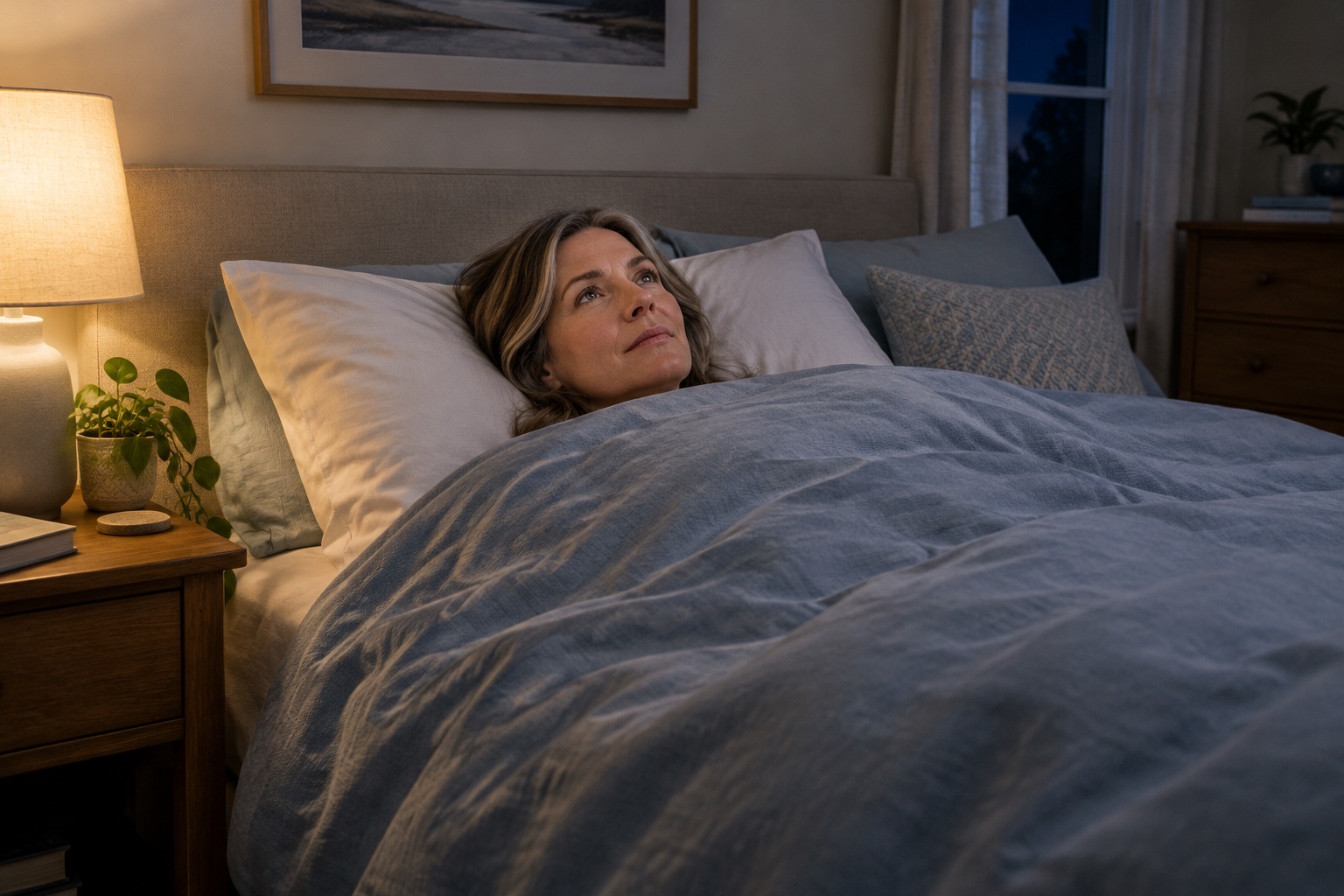
You are tired all day. Then bedtime comes, and your brain opens 27 tabs. If sleep changed in midlife, you deserve more than, “That is just aging.”
Can progesterone help? For some women, it may. But the form, your symptoms, and your health history matter. Here is what the research can actually tell us.
What kind of progesterone was studied?
The sleep research below looked at micronized progesterone, mainly taken by mouth. “Micronized” means the medicine is made into very small particles to help the body absorb it.
A capsule, a skin cream, and a compounded blend are not the same treatment. Think of a medicine's route like a delivery address. Changing the address can change where it goes and how it works. These sleep results do not prove that a cream or every hormone blend will have the same effect.
The promising part, and the limits
A 2021 review of nine randomized trials included 388 people. Most trials enrolled women after menopause. Some sleep measures improved, but results varied.
When researchers combined four trials, progesterone helped people fall asleep sooner. The combined results did not show a clear benefit for total sleep time or the share of time in bed spent asleep. Some trials also used estrogen. Relief from hot flashes could have helped sleep, too. That makes it harder to separate progesterone's own effect.
A 2023 trial in 189 women in perimenopause compared oral micronized progesterone with a placebo for three months. Women taking progesterone reported better sleep quality. But sleep was a secondary outcome. The main hot-flash and night-sweat score did not show a statistically clear difference between groups.
That is a reason to discuss an option, not a promise of perfect sleep. The trial studied a specific prescription regimen. It is not a do-it-yourself dosing guide.
Sleepiness is not the whole goal
The prescription capsule label warns about dizziness and drowsiness. Some capsules contain peanut oil. Tell your clinician about allergies, other medicines, and your full health history. Follow your prescription. Do not borrow someone else's medicine or raise your dose to chase sleep.
Sleep problems are not all the same. Ask whether night sweats, snoring, pain, worry, or another medicine needs attention. For long-term insomnia, NIH guidance recommends CBT-I as the usual first treatment. It teaches skills that help your brain reconnect bed with sleep. Our plain-language CBT-I guide explains more.
Bring these notes to your visit
For one week, write down:
- When you go to bed and get up.
- What wakes you: heat, worry, pain, bathroom trips, or no clear reason.
- Any cycle changes, hot flashes, and next-day sleepiness.
- Your medicines, supplements, caffeine, and evening alcohol.
Then ask: “What are we treating? Which form has evidence for my situation? How will we check whether it helps?” A useful plan should have a goal and a follow-up, not just a refill.
A next step in Northwest Arkansas
At Healing Art Centers in Lowell, we help people across Northwest Arkansas talk through hormone concerns and their care options. You deserve a plan that fits your life.
A few January 2027 new-patient hormone and functional medicine consultation spots have opened. View current availability and request an appointment. Our receptionist follows up by email. A request is not a confirmed booking. Keep working with your current clinician while you wait.
This article is for education. It does not diagnose a sleep problem or replace individual medical care.
Discuss sleep and hormone care options
A few January 2027 new-patient hormone and functional medicine consultation spots have opened. Request an appointment, and our receptionist will follow up by email about availability and next steps. A request is not a confirmed booking. Keep working with your current clinician on sleep concerns while you wait.