It may be only a spot on the tissue. It may stop the same day. If you have been through menopause, that small change still deserves a call to your clinician.
You do not need to decide what caused it before asking for care. A simple message is enough: “I have gone more than a year without a period, and now I have spotting. What should I do next?”
Why even light spotting matters
Bleeding after menopause means bleeding after your periods have stopped for at least 12 months. It can be light spotting rather than a period-like flow. Contact your clinician or ob-gyn promptly, even if the bleeding stops. [1,2]
Think of spotting like a small warning light on the dashboard. It tells you to find out what is happening. It does not tell you the diagnosis.
Possible causes include thinning tissue, polyps, or changes in the lining of the uterus. Some causes are not cancer. Others need treatment or testing to rule out cancer. An exam and the right tests help tell the difference. [2]
Evaluation is not a cancer diagnosis
A 2018 review combined 129 studies involving more than 40,000 women. About 9% of women with postmenopausal bleeding were diagnosed with endometrial cancer, which starts in the uterine lining. Most were not. The estimates varied by region and hormone use. That average cannot tell you your own risk. [3]
The point is to check the symptom, not to assume the worst or dismiss it. You deserve a clear next step.
What might the visit include?
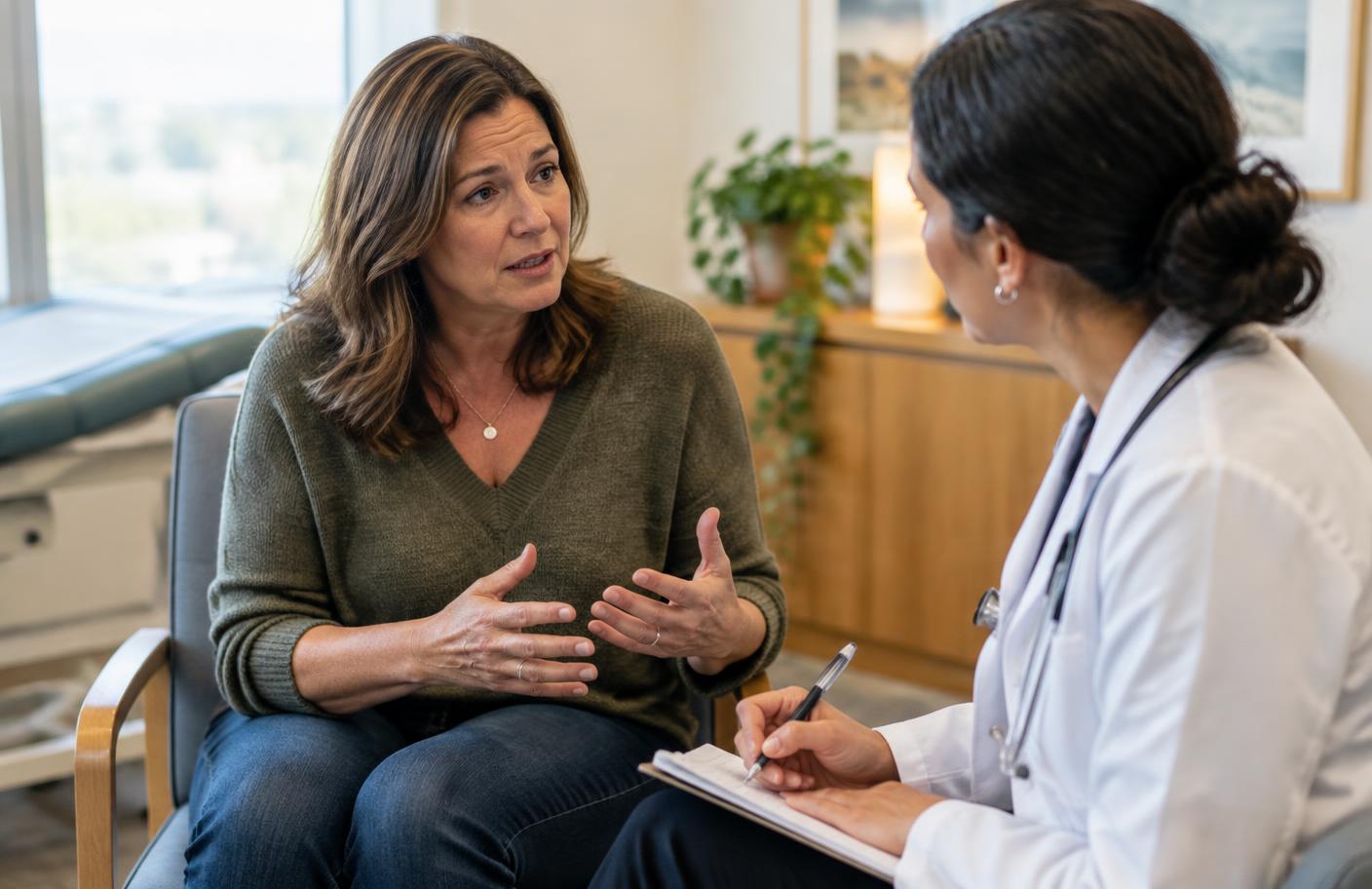
Your clinician will ask about the bleeding, medicines, and health history. An examination may be needed to look for the source. Tell them about all hormone products, blood thinners, and other medicines you use. [2]
In 2026, the American College of Obstetricians and Gynecologists updated its guidance. For most patients with postmenopausal bleeding, it recommends both an ultrasound done through the vagina and a sample of the uterine lining as part of the first evaluation. Some carefully selected patients may have ultrasound alone. [4]
The lining sample is called an endometrial biopsy. Ask what each test can show and why it fits your situation. The decision should include your health risks, preferences, and access to follow-up. If bleeding continues or comes back after evaluation, contact your clinician again promptly. [4]
You can ask about comfort and pain-control options before a procedure. You can also ask the clinician to explain each step before it happens.
Bring a short note, not a perfect diary
Before your visit, write down:
- When your last period was, as best you remember.
- When the spotting started and whether it happened again.
- How much blood you noticed and any pain or other symptoms.
- Your medicines, hormone products, supplements, and recent changes.
- Your top questions about the exam and next steps.
These notes can make the conversation easier. Do not delay calling while you gather every detail. If you use hormones, contact the prescribing clinician about the bleeding rather than guessing at a dose change.
When to seek emergency care
If bleeding is heavy enough that you are changing a pad or tampon every hour for more than two hours, especially with chest pain, shortness of breath, or dizziness, seek emergency medical care right away. [5]
Light spotting still needs a prompt call. The amount of blood does not replace an evaluation.
A next step in Northwest Arkansas
Contact your current clinician or ob-gyn now for bleeding after menopause. Do not wait for a future hormone consultation to address it.
For longer-term menopause support, Healing Art Centers in Lowell serves Rogers, Springdale, Fayetteville, Bentonville, and nearby communities. Explore our menopause and perimenopause care page. New general and hormone consultations currently use a wait list. Our consultation page explains current availability and how to join.
General education. The cause of bleeding and the right tests require an individual clinical evaluation.
Sources
- National Cancer Institute: Bleeding after menopause and evaluation
- ACOG: Perimenopausal bleeding and bleeding after menopause
- Clarke and colleagues: Systematic review of postmenopausal bleeding and cancer risk (2018)
- ACOG: Updated evaluation guidance (2026)
- ACOG: Abnormal uterine bleeding and emergency symptoms
Wondering if this is what's going on with you?
Bleeding after menopause needs prompt medical evaluation. Contact your current clinician or ob-gyn now. For longer-term menopause support, our consultation page explains current availability.