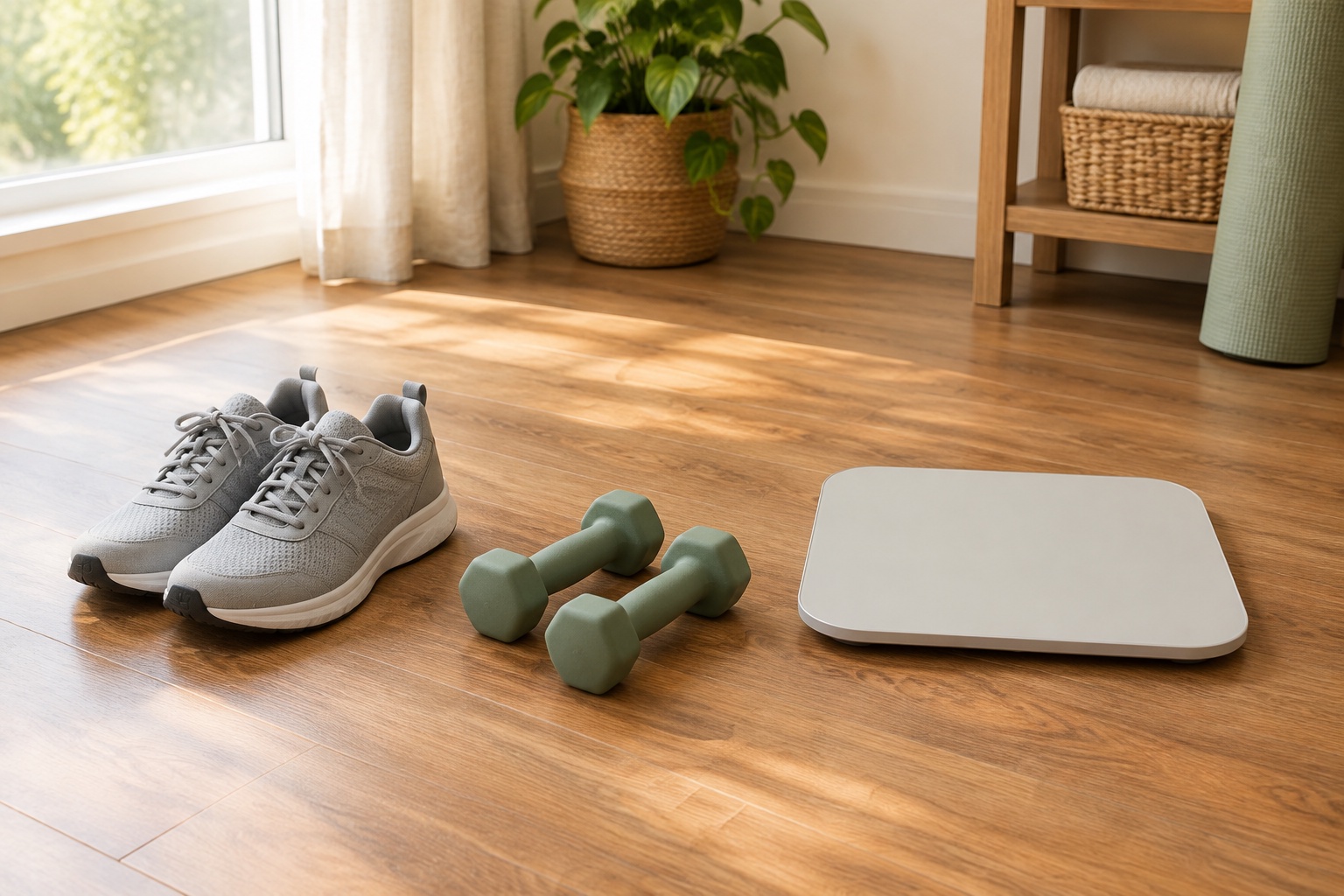
Your jeans fit differently, but the scale barely moved. Or your weight crept up while your usual routine stayed much the same.
That can be frustrating. It is also a reason to look beyond one number. A scale weighs everything together. It cannot tell how much is fat, muscle, bone, or water.
What researchers found around menopause
A 2019 study from the Study of Women's Health Across the Nation followed women over time. Researchers used scans to measure fat and lean tissue around the final menstrual period.
As women entered the menopause transition, fat gain sped up and lean tissue declined. Yet the rate of weight gain did not speed up at that same point. In other words, the scale did not show the full change in what the body was made of.
This was an observational study, not a treatment trial. It describes patterns across a group. It does not predict every woman's body changes or prove that hormone therapy causes weight loss. The research scans also do not mean everyone needs a body composition scan.
Think about what your body can do
Picture two grocery bags that weigh the same. One holds different items from the other. The total weight tells you very little about what is inside.
Your body is more complex than a grocery bag, of course. But the point helps: a weight reading is one piece of information.
For your next visit, bring a few useful notes:
- Has your weight changed over weeks or months?
- Have stairs, carrying groceries, or getting up from a chair become harder?
- Are hot flashes, pain, or poor sleep changing your usual activity?
- Have medicines, eating habits, or your daily schedule changed?
Clothing fit and daily tasks can start a conversation. They cannot measure body fat or diagnose muscle loss.
Keep walking. Add a strength plan, too.
The CDC's adult activity guidance includes both aerobic activity and muscle-strengthening work. The general weekly goal is at least 150 minutes of moderate activity, such as brisk walking, plus strength work on two or more days.
You can break activity into smaller parts. Some is better than none. Strength sessions should work the major muscle groups, not just the arms.
If you are starting from very little activity, build gradually. Ask for a safe starting plan if pain, balance trouble, or a health condition limits you. Our midlife walking and strength guide explains questions to bring to that discussion.
Make the first week manageable
Choose one walk that fits your day. Put it on your calendar. Then pick a time to plan strength work, whether that means reviewing a familiar routine or asking a qualified professional where to start.
Notice what gets in the way. Is the problem time, poor sleep, joint pain, or not knowing what to do? Solving that specific problem is more useful than promising yourself a perfect routine.
If walking after a meal fits your day, our after-meal walking guide offers a simple starting point. Adjust activity to your own health needs.
Ask what your care plan is trying to improve
Bring your notes to a visit and ask, “Which changes matter for my health, and how will we track them?” Discuss menopause symptoms, medicines, daily function, and your weight history. Ask which tests, if any, would change the plan.
If you discuss hormone therapy, ask about its specific purpose, benefits, and risks for you. The study above cannot support a promise that hormones will make the scale drop.
Support here in Northwest Arkansas
Women in Lowell, Rogers, Springdale, and Bentonville deserve a plan they can use. For longer-term hormone and functional medicine support, check Healing Art Centers' consultation availability. A few January 2027 new-patient spots have opened. Request a consultation, and our receptionist will follow up by email. A request is not a confirmed booking.
Keep working with your current clinician on new symptoms or major changes while you wait.
This article is educational. It cannot diagnose a cause of weight change or choose treatment for you.
Build a plan for your midlife health
A few January 2027 new-patient hormone and functional medicine consultation spots have opened. Request a consultation, and our receptionist will follow up by email about availability and next steps. A request is not a confirmed booking. Keep working with your current clinician on new symptoms or large weight changes while you wait.